
The Science of Change
Understanding ourselves through a neuroscience-informed lens
Change is not just motivational, it’s biological. Modern neuroscience reveals that our brains, bodies, environments, and experiences are continuously interacting; shaping who we are and who we can become.
Many of us grow up learning that the mind and body are separate. Modern neuroscience paints a far more interesting picture: the brain is not separate from the body and the mind is not separate from biology. Thoughts, emotions, behaviors, physiology, relationships, environment, and lived experience are all part of the same interconnected systems.
The Science of Change is an educational resource dedicated to exploring the neuroscience of human growth, adaptation, learning, and lived experience.
ON THIS PAGE
Neuroplasticity:
The Capacity for Change
-
One of the most important discoveries in modern neuroscience is that the nervous system is not fixed. While certain aspects of development become less flexible over time, the brain and nervous system remain capable of change throughout life. This capacity for change is known as neuroplasticity.
Neuroplasticity refers to the nervous system's ability to adapt in response to experience. Neural pathways can strengthen through repetition, existing connections can weaken when used less frequently, and networks can reorganize through learning, practice, recovery, and adaptation.
Neuroplasticity does not mean that anyone can become anything through willpower alone, nor does it erase the influence of genetics, health, development, environment, or circumstance. Rather, it provides evidence that change remains possible throughout the lifespan.
-
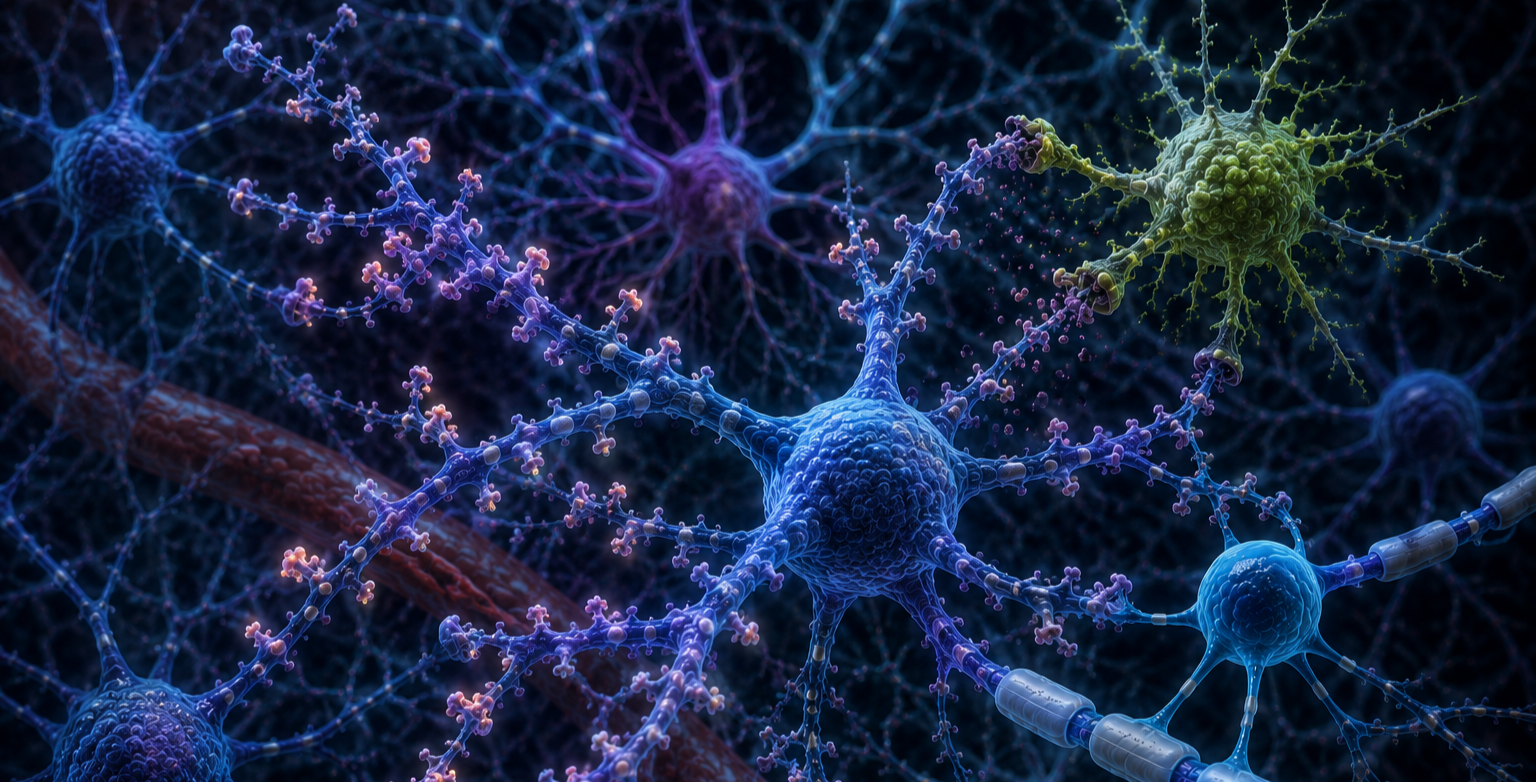
Neuroplasticity is often described as neurons forming new connections, but the reality is far more complex. The nervous system is an ecosystem.
Neurons do not work alone. Glial cells, the immune system, hormones, sensory input, and the body's internal state all influence how the nervous system develops, adapts, and responds to experience. This is why sleep affects learning, stress influences attention and decision-making, inflammation can shape mood and cognition, movement alters brain activity, and relationships help shape nervous system development.
The story of change is not simply about the brain. It is about the ongoing interaction between the brain, body, environment, and lived experience.
-
The distinction between "mind" and "body" can be useful shorthand. However, it is not an accurate reflection of how human beings actually function.
Thoughts influence physiology. Physiology influences thoughts. Emotions involve both subjective experience and measurable biological processes. Learning changes the nervous system. The nervous system affects how we learn. When we feel anxious, our heart rate may increase, our breathing may change, our muscles may tense, and our attention may narrow.
When we are sleep deprived, undernourished, overwhelmed, in pain, chronically stressed, or physically unwell, our ability to focus, regulate emotions, solve problems, and make decisions can change dramatically. Science shows that the brain is not observing the body from a distance.
The brain is part of the body. Understanding this interconnectedness allows us to move beyond simplistic explanations that reduce human experiences to either "it's all in your head" or "it's purely physical." The reality is often more complex; and significantly more interesting.
-
Many people come to view themselves through the lens of deficiency: "I am lazy," "I am broken," or "I lack discipline." Neuroscience encourages a different question: How might this pattern be an adaptation?
The nervous system is constantly working to help us survive, predict, learn, and navigate the world around us. Habits, avoidance patterns, perfectionism, emotional reactions, and coping strategies often develop for understandable reasons, even when they no longer serve us well.
This does not mean every pattern is helpful or that change is unnecessary. Rather, it suggests that understanding often creates more opportunity for meaningful change than judgment does. One of the central ideas that informs Neuroplastic Pathways is that people are frequently more adaptive than they realize. The goal is not to determine what is wrong with a person, but to better understand how their nervous system has learned to navigate the world.
-
Neuroplasticity is often described as the brain's ability to change, learn, and adapt. While this is true, plasticity itself is neither good nor bad. It is simply the nervous system's capacity to change in response to experience.
The same biological processes that allow a person to learn an instrument, master a dance routine, recover language after a stroke, or regain movement following a spinal cord injury can also contribute to the persistence of addiction, trauma-related responses, chronic pain, functional neurological symptoms, and some forms of medication-resistant epilepsy.
Neuroplasticity does not distinguish between helpful and harmful patterns. It reflects the nervous system's ongoing adaptation to repeated experiences, thoughts, emotions, behaviors, and environments. Understanding this helps move conversations about growth beyond simplistic ideas of willpower or mindset and toward a deeper appreciation of the complex biology that shapes human experience.
The hopeful reality is not that change is easy, but that change remains possible. Throughout life, the nervous system retains the capacity to learn, adapt, and reorganize in response to new experiences.
-
Meaningful change rarely happens overnight. While people often hope for dramatic breakthroughs, neuroscience suggests that lasting change is more often the result of repeated experiences, consistent practice, and supportive environments over time.
New patterns of thinking, feeling, and behaving are built gradually. Progress is rarely linear, and periods of growth may be accompanied by setbacks, plateaus, or challenges. This does not mean change is not occurring. Many adaptations develop beneath the surface long before they become visible.
Since biological systems change over time, sustainable growth often requires patience, self-compassion, and realistic expectations.
-
At Neuroplastic Pathways, neuroscience is not used as a collection of buzzwords or productivity hacks. Instead, it serves as a framework for understanding the complexity of human experience and the interconnected relationship between the brain, body, environment, and lived experience.
A neuroscience-informed perspective acknowledges both the reality of constraints and the possibility of growth. It values curiosity over judgment, understanding over shame, and adaptation over deficiency.
The goal of coaching is not to fix what is broken or to transform someone into a different person. It is to support greater self-awareness, intentionality, and alignment with what matters most. Meaningful change often begins not with becoming someone else, but with understanding ourselves more deeply.

The Myth of the Mind-Body Divide



Beyond “Brain Rewiring”
The Nervous System is Adaptive
Neuroplasticity is Not Always Positive
Why Sustainable Change Takes Time
What This Means for Coaching
Continue Exploring
The science of change is always evolving. Future resources will explore topics such as:

Neuroplasticity: Myths and Facts

Chronic Illness and the Nervous System

Neurodiversity and the Adaptive Brain

Trauma, Adaptation, and Recovery
Stress, Learning, and Resilience
Neuroimmune Interactions

Sleep and Nervous System Function

Habits, Behavior Change, and Growth
Executive Functioning and Self-Regulation

And More Coming Soon